People enroll in a first aid course with different motivations. Some require it for job, others wish to really feel beneficial at the footy oval, and plenty have had a scare at home that pushed them to get serious regarding abilities. Despite the factor, the same inquiry rolls around when you start considering Ballarat first aid training: how does the evaluation really function? What will certainly you be asked to do, and just how do instructors determine you're competent?
I've provided and moderated first aid and CPR assessments throughout Victoria for many years, including plenty of weekend breaks in Ballarat. The process is structured, yet it's not meant to be daunting. Assessment is there to show you can do the things that matter when somebody's weak or harmed. It's also developed to seem like a wedding rehearsal for the real life, not an academic exam. Below, I'll unbox the nuts and screws for common units you'll find in a first aid course in Ballarat, what assessors seek, and exactly how to prepare in a manner that sticks.
What "evaluation" truly suggests in very first aid
Australian emergency treatment training works within a proficiency framework. You either fulfill the basic or you do not yet, and you can commonly be reassessed after targeted method. It's not graded with marks. In a normal first aid course in Ballarat, evaluation consists of a mix of useful presentations, circumstance feedbacks, and short-answer concerns that examine your understanding of why you're doing what you're doing.
The sensible component brings the most weight due to the fact that genuine emergency situations hinge on what you perform with your hands and your voice. You'll be asked to show CPR on a manikin, location a person into the recovery placement safely, use a pressure bandage appropriately, and manage a few circumstances where your trainer plays the "patient" or a spectator. Along with this, you'll finish a concept component, typically open publication if pre-learning is done online. The concerns aren't made to deceive you. They strengthen the choices you make in the practical.
Providers like First Aid Pro Ballarat, in addition to various other trustworthy training teams in the region, adhere to national devices of proficiency so the requirement corresponds. The style of distribution may vary somewhat, yet the assessment outcomes coincide: if you satisfy competency, you'll get your first aid certificate Ballarat based and nationally recognised.
Units you'll likely encounter and exactly how they're assessed
Most Ballarat first aid courses cover several of the list below nationwide systems. Different names show up on marketing pages, yet the unit codes remain the exact same across Australia.
- HLTAID009 Give cardiopulmonary resuscitation HLTAID010 Give standard emergency situation life support HLTAID011 Supply very first aid
Some offices call for HLTAID012 Give emergency treatment in an education and learning and treatment setup. The technicians of analysis are similar, with added emphasis on child and baby scenarios.
Within Ballarat emergency treatment courses, HLTAID011 is one of the most typical complete program for the general public, with HLTAID009 as a much shorter CPR course Ballarat homeowners commonly take as a standalone or refresher. CPR training Ballarat vast gets booked heavily by sports clubs and tradies. The assessment pieces listed below map to those units.
CPR evaluation: what it demands and exactly how it's tested
CPR is the most time-sensitive ability you find out. The analysis focuses on two points: top quality compressions and right sequencing of actions.
Expect to carry out continuous breast compressions and breaths on an adult manikin positioned on the flooring. You'll need to supply compressions at the correct deepness and price, allow full breast recoil, and minimise disturbances. Several programs now make use of responses manikins with a light or gauge that reveals whether your deepness and price are on target. In older manikins, the trainer will evaluate your efficiency making use of a timer and visual cues.
For grown-up mouth-to-mouth resuscitation, the target rate is roughly 100 to 120 compressions per minute, with a deepness of concerning one third of the chest, typically 5 to 6 centimetres. The assessor will enjoy your hand positioning, arm placement, and the rhythm you sustain over a minimum of 2 minutes. You'll also demonstrate rescue breaths using a face guard or mask, including appropriate head tilt, chin lift, and visible upper body rise. Some providers permit compression-only mouth-to-mouth resuscitation for component of the assessment if infection control or student preference requires it, but you'll still be asked to define the full sequence.
You'll likewise show AED usage. That suggests turning the gadget on, adhering to prompts, putting pads appropriately, making certain no one is touching the individual before a shock, and resuming compressions swiftly. In a CPR refresher course Ballarat individuals typically take annually, the AED component is a great snapshot of real-world preparedness. A tranquil voice and clear instructions to onlookers count just as long as where you stick the pads.
Paediatric elements are common in an emergency treatment and CPR course Ballarat parents and educators go to. You'll demonstrate baby mouth-to-mouth resuscitation with two fingers in the centre of the upper body, once again at the right deepness and price. For youngster CPR, make use of one or two hands depending upon size, pressing one third of the breast. The assessor searches for secure respiratory tract placing for infants and youngsters, as their anatomy varies from grownups. Practising on the manikins before the formal analysis helps you discover the rhythm that shields your wrists and maintains your outcome consistent.
First aid analysis beyond CPR
If you enrol in an emergency treatment course Ballarat large that covers HLTAID011, mouth-to-mouth resuscitation is just one element. You'll be evaluated in essential areas that come up typically in community and workplace setups:
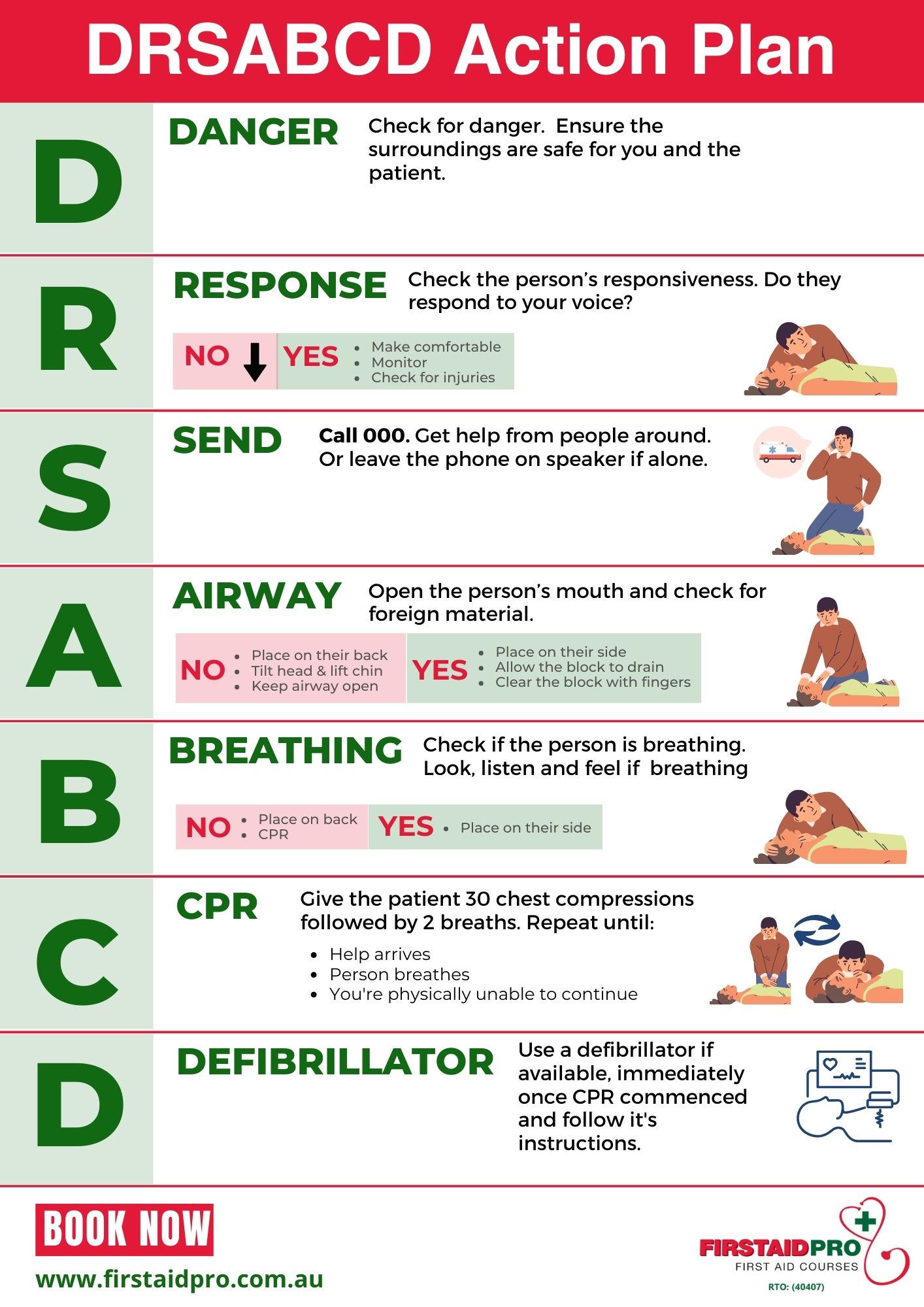
Primary survey and scene monitoring. You'll run a DRSABCD sequence: looking for risk, replying to the casualty, sending out for aid, air passages, breathing, and starting CPR or administration. Assessors try to find your capacity to take control, telephone call 000 very early or delegate that job, and utilize sources like an emergency treatment set or an AED. The assessment checks how you interact with bystanders and exactly how you protect on your own with handwear covers or eye security when needed.
Bleeding and injury care. You'll use direct stress, raise if suitable, and plaster effectively. Expect to demonstrate a pressure bandage method that stays snug without removing flow, and to apply a pad or dressing that covers the wound easily. In some sessions, you might be asked to take care of a nosebleed or a penetrating things scenario.
Fractures, sprains, and pressures. You'll be evaluated on sustaining an injured arm or leg, immobilising where needed, and utilizing a sling or splint. Quick story from a Ballarat storage facility training course years ago: one participant built a great improvised splint from a rolled magazine and gaffer tape. The fitness instructor passed him with a smile and used that arrangement as the day's "best functional hack." Improvisation obtains compensated when it's safe and effective.
Burns. You'll be asked to describe and show cooling a melt with trendy running water for 20 mins, then covering gently with a non-adhesive clothing. The analysis checks that you stay clear of ice and creams for fresh burns.
Medical conditions. You'll walk through recognition and management for asthma, anaphylaxis, upper body pain, stroke signs, seizures, and diabetic person emergencies. Fitness instructors typically run brief scenarios, as an example an asthmatic person whose flatterer neighbors. You'll use a spacer, aid with positioning, and call for aid if signs and symptoms aggravate. For anaphylaxis, you'll use an instructor adrenaline auto-injector on a mannequin thigh and display for enhancement or relapse.
Shock and fainting. Evaluation consists of acknowledgment and supportive care, such as existing the person down, maintaining them warm, and staying clear of giving food or beverage up until totally recovered, first aid pro ballarat unless taking care of a hypoglycaemic episode.
Choking. You'll show back blows and chest drives for grownups and children. For infants, you'll show the right positioning along the lower arm, with head sustained downwards.
Recovery position. You'll position a person into a stable side placement safely, safeguarding their neck and keeping the air passage clear. This sounds easy, however it's simple to hurry. Assessors seek control and convenience, not just speed.
You won't be examined on memorising medical jargon. You will certainly be examined on risk-free concerns, tidy method, and steady interaction. If you can explain your choices while your hands are busy, you're doing it right.
How scenario analyses run in Ballarat classrooms
Scenario assessment ties the pieces together. A common Ballarat emergency treatment training day blends brief presentations with progressively more realistic scenarios. Trainers established the scene: a collapse near Sturt Road, a ladder autumn in a Delacombe garage, a child with a peanut allergy at a birthday in Wendouree. They may add an easy prop or two and a participating "client." Your work is to make decisions rapidly using DRSABCD, call for help, and use the best skill.
Assessors flow quietly initially, after that observe a lot more very closely as you work. They're trying to find secure sequencing, not theatre. Envision a stroke situation: you recognise facial droop and slurred speech, examine the moment signs and symptoms started, call 000, maintain the person at rest, and monitor. The ideal call defeats a flurry of unneeded activities. If you fail to remember one step but show sound judgment, many trainers will trigger you, then recheck that void later.
CPR scenarios tend to be one of the most physical. Floors are hard, and two minutes can really feel long. Educating spaces in Ballarat usually have floor coverings, yet expect to end up with sore forearms anyway. If you have knee problems or neck and back pain, tell your instructor early. They can reveal you just how to position yourself to lower pressure and still satisfy performance. Assessment standards allow for reasonable adjustments that do not endanger patient safety.
Theory components and pre-learning
Most carriers currently divide theory right into on-line pre-learning and a shorter in-person theory check. First Aid Pro Ballarat and other local suppliers normally email you access to a learner portal with reading and brief tests prior to the classroom day. This keeps the in person time concentrated on hands-on skills.
On the day, you might deal with a brief paper-based or digital understanding check. Anticipate scenario-style inquiries, not unknown meanings. For instance, when to use a tourniquet for dangerous bleeding, or the suggested melt cooling time. The theory item supports the sensible work. If you locate a few questions, trainers will stroll you via the reasoning, after that allow you reattempt.
What counts as competent: the assessor's lens
Assessors use a list aligned to the unit's performance requirements and structure skills. Every trainer I know in Ballarat carries a variation of this on a clipboard. They mark observations like "placements patient correctly for recovery," "specifies the need to call 000," "preserves compressions at appropriate rate and deepness for 2 mins," and "utilizes PPE appropriately." They additionally keep in mind soft abilities: communication, delegation, staying tranquility, and cultural sensitivity.
The lens is sensible. If you're a little bit unsteady on a plaster but it remains protected and protects circulation, that meets the standard. If you rattle off book terms but avoid the phone call to 000 in a chest pain situation, that's a red flag. Security and priorities outdo polish.
If you're not yet proficient in a specific part, you're normally used a targeted review the very same day or shortly after. Usual factors for review are shallow mouth-to-mouth resuscitation compressions, missing out on AED pad positioning, or steps avoided in the recovery placement. Trainers want you to pass. Mentoring you to remedy a solitary aspect isn't unusual.
How long it takes and what initiative looks like
Timing differs by course kind:

- CPR programs Ballarat based: often 2 to 3 hours in person, plus 30 to 90 mins of pre-learning. First aid and CPR courses Ballarat wide (HLTAID011): usually 5 to 7 hours in person, with 1 to 3 hours of pre-learning. Education and care setup courses: comparable or somewhat much longer, because of additional child-focused content.
The time on paper conceals the genuine effort: purposeful technique. A few minutes on a manikin prior to official assessment repays. So does scanning your concept notes for the high-yield products: DRSABCD series, hemorrhaging control, shed cooling time, indications of stroke, and anaphylaxis activities. If you're restoring, concentrate on strategy drift. Plenty of experienced first aiders progressively reduce their mouth-to-mouth resuscitation depth without observing. Responses tools in course will certainly show you if that's happening.
What to bring and endure the day
A little prep work eliminates friction. For first aid training in Ballarat, dress for the flooring. You'll kneel, lean, and lift. Pants or work pants, shut shoes, and layers for Ballarat's unpredictable climate make good sense. Bring a canteen and a treat. If you utilize reviewing glasses, pack them for the concept section and for inspecting AED diagrams.
If you have an existing condition that limitations stooping or raising, tell the trainer early. They can set up a cushion or give choices that still demonstrate competency. The objective is to validate you can perform the significance of the ability safely, not to check your joints.
What adjustments in assessments for work environments and clubs
When companies provide emergency treatment training Ballarat large in offices, the analysis often leans into the atmosphere. In a metal shop, scenarios might highlight crush injuries and hemorrhaging control. At a childcare solution, you'll see asthma, anaphylaxis, and choking for infants. Football clubs typically request extra time on blast indications and back management. The official proficiencies stay the exact same, yet the scenarios help you visualize the real phone calls you'll take.
If your work environment has certain tools, like a certain AED version or a trauma kit, fitness instructors can incorporate it right into analysis. It deserves asking for this because you'll find out pad positioning and device quirks you'll actually use.
How top quality and honesty are maintained
People sometimes fret that a quick program indicates light evaluation. In practice, the national framework keeps everybody sincere. Ballarat emergency treatment courses are audited versus the units of competency, and assessors need current sector skills. Training courses top class sizes so each participant obtains observed effectively. If you remain in a room that really feels jammed, that's a warning worth raising.
Manikins and fitness instructor devices are maintained and cleansed according to infection control criteria. AED fitness instructors obtain updated frequently to simulate present models. The best providers also integrate in time for questions, not simply drills. That's where students raise edge situations: pacemakers and AED pads, bleeding with blood slimmers, CPR on soft surface areas, or asthma during high pollen days in spring.
The difference in between passing a program and being ready
A first aid certificate Ballarat locals can present to a company shows you have actually demonstrated competency on that particular day. Readiness extends past the certification. It resides in little practices:
- Checking the components of your home or work first aid kit and changing ended items. Knowing where the closest AED goes to the locations you spend time. Rehearsing your phone manuscript for Triple Zero: who you are, your precise location, what you see, and what you have actually done.
Those habits make the analysis feel like a starting line rather than a finish. When a person falls down at the bakeshop or a youngster chokes at a family lunch, your body will certainly adhere to the grooves you've carved: scene check, phone call for aid, act.
Common stumbling blocks and how to stay clear of them
From years of seeing analyses, I can anticipate where many people totter. Right here's exactly how cpr courses ballarat to avoid:
CPR depth and price. Individuals either compress also superficial or also quick. Make use of the beat of a familiar track around 100 to 120 per minute to keep pace. Lock your elbow joints, stack your shoulders over your hands, and allow your body weight do the work. It conserves your wrists and keeps depth consistent.
AED pad placement. Pads go high appropriate and reduced left on the bare upper body, preventing pacemaker bulges and medicine patches. If the client is very unshaven, shaving spots is optimal, but in a time-critical collapse, place pads securely to obtain contact.
Recovery position. Do not rush. Position the much arm across the upper body, bend the close to knee, roll delicately, and turn the head back slightly to maintain the air passage clear. Assistance the neck. Inspect breathing continuously.
Choking steps. Grownups and children: back impacts initially, then breast drives if needed. For babies, utilize gravity with the head down, and be precise and gentle with your strikes and thrusts.
Bleeding control. Straight pressure is the first intervention. Tourniquets are for lethal arm or leg blood loss when straight pressure isn't effective or risk-free. If you use one, note the time.
Each of these can be understood with 5 focused minutes on the training flooring prior to the official monitoring. Fitness instructors will happily view and offer pointers.

Renewals, refreshers, and why rep matters
Skills decay. Studies show quantifiable drop-offs in mouth-to-mouth resuscitation quality within months without method. That's why many employers motivate an annual CPR refresher course Ballarat based, and a complete emergency treatment renewal every three years, even when the certificate states it stays legitimate. If you've used your skills in the real world, inform your trainer. They can weave those experiences into situations that secure learning.
For people in high-turnover volunteer functions, like younger sporting activity trainers and institution parents, short CPR courses Ballarat carriers run in the evenings can maintain your reflexes sharp without consuming your weekend. It's not a sales pitch. It's the quiet acknowledgment that when the phone call comes, you'll have a few secs to decide and act.
Choosing a supplier in Ballarat and what to ask
Ballarat has several reliable choices for emergency treatment and CPR training courses. Whether you go with First Aid Pro Ballarat or another regional provider, ask a few useful questions prior to booking:
- How a lot of the theory is on-line pre-learning and for how long does it take? What manikins and feedback devices do you make use of for CPR? What's the typical course size? Do you cover infant and youngster scenarios if I require them for job or family? How swiftly do you provide certificates after successful assessment?
The answers will give you a feeling of exactly how the day will run and whether it fits your requirements. If a program promises the earth in under an hour, it deserves being skeptical. The very best first aid courses Ballarat residents go to feeling effective but calm, with adequate space for inquiries and repetition.
A brief walk-through of a normal evaluation day
To take the enigma from it, here's the rhythm I've seen in lots of Ballarat first aid training sessions:
You get here a couple of mins early to check in. The trainer checks your pre-learning conclusion and any type of unique requirements. After a security brief and a rundown of the day, the team warms up with DRSABCD walkthroughs. Instructors show methods, then break the course right into sets to practise. CPR drills come not long after, with comments tools aiding you discover the appropriate depth and price. The very first official evaluation usually takes place prior to morning tea so everybody obtains the physical work done while fresh.
After a break, the team cycles via injuries, blood loss, and bandaging, after that choking and healing setting. Situations begin to blend abilities: a loss with believed crack and blood loss, an abrupt wheeze with stress and anxiety. Instructors examine discreetly, clipboard off the beaten track, asking little inquiries that check understanding. Concept checks weave in, usually fast and concentrated. By the mid-day, confidence levels climb. You'll see people's voices getting clearer and their movements more economical.
When the assessment coatings, fitness instructors debrief and highlight a couple of usual success and errors. Certifications arrive digitally, often within 24 to 48 hours, sometimes the exact same day. You leave a little worn out, with aching arms and a quiet sense that you could do the best thing if someone required you.
Final ideas from the training floor
Assessment in an emergency treatment and CPR Ballarat course isn't regarding rote memory or thrilling an inspector. It's the practice session that instructs your hands what to do when your mind really feels swamped. A great fitness instructor will duplicate the mantra of priorities till it sticks: examine safety and security, check response, phone call for assistance, begin the right action. The checklist in their hand is your ally, not your judge.
When you schedule your first aid course in Ballarat, deal with the assessment as a completely dry run for the hardest day you wish never ever gets here. Ask concerns, practise up until your shoulders hurt, and make the effort to understand why each step exists. When you pass, you'll have more than a certificate. You'll have a reliable regimen for turmoil, which's what emergency treatment actually is.